Why Montessori Educational Materials Matter: Supporting Better Learning Through Play and Practical Activities
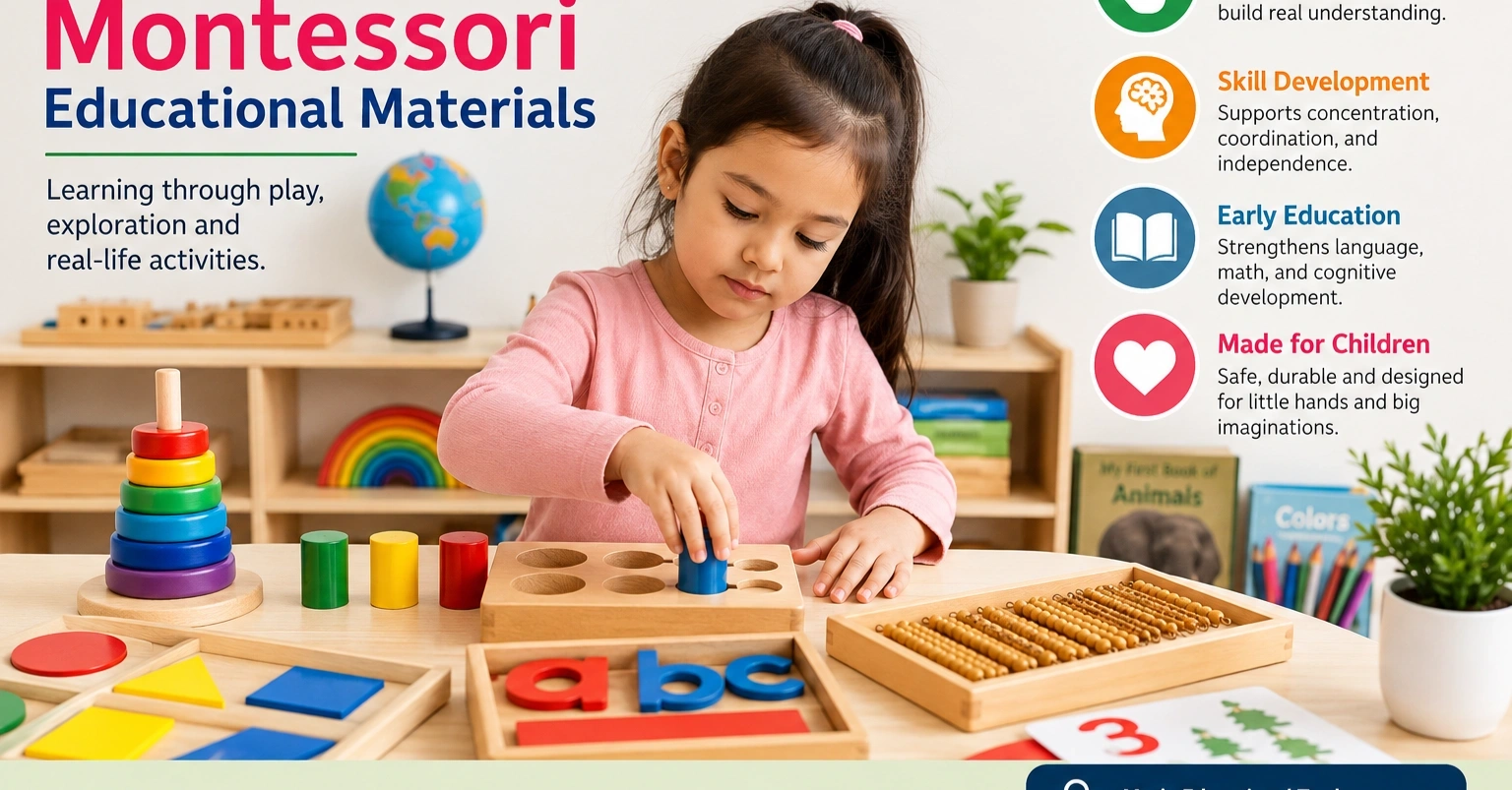
Children learn best when they are given opportunities to explore, touch, observe, experiment, and discover things independently. This is one of the central ideas behind the Montessori approach to education. Instead of relying only on traditional teaching methods, Montessori learning encourages children to develop skills through practical activities, carefully designed materials, repetition, and hands-on experiences.
For parents, teachers, schools, and educational institutions, choosing the right learning materials can make everyday learning more engaging and meaningful. Maria Educational Trade provides educational learning materials and Montessori items designed to support children's learning, creativity, concentration, coordination, and independence.
What Are Montessori Educational Materials?
Montessori educational materials are specially designed learning tools that allow children to understand concepts through hands-on activities. Rather than simply telling a child how something works, these materials encourage the child to explore and learn through direct experience.
Montessori materials can support different areas of development, including:
Practical life skills
Fine motor skills
Hand-eye coordination
Early mathematics
Language development
Sensory exploration
Logical thinking
Creativity
Concentration
Problem-solving
The purpose is not simply to keep children busy. Good educational materials give children an opportunity to actively participate in the learning process.
Why Hands-On Learning Is Important
Young children naturally want to touch and explore the world around them. Hands-on learning takes advantage of this natural curiosity.
For example, instead of asking a child to memorize numbers, a teacher or parent can use counting materials to help the child physically understand quantity. Similarly, puzzles, sorting activities, matching materials, and building resources can help children develop logical thinking while enjoying the activity.
When children participate actively, learning can become more memorable. They can make mistakes, try again, observe results, and gradually understand concepts through experience.
This approach can also help children develop patience and concentration because many Montessori activities encourage repetition.
Developing Independence Through Practical Activities
One of the important goals of Montessori education is encouraging children to become more independent.
Practical life activities can introduce children to simple tasks such as sorting, arranging, transferring, matching, buttoning, pouring, and organizing. These activities may appear simple to adults, but they can help children practise coordination, concentration, sequencing, and responsibility.
Educational materials designed around practical activities allow children to learn at their own pace. With appropriate guidance, children can gradually become more confident in completing tasks without constant adult assistance.
Independence does not mean leaving children completely on their own. Parents and teachers still have an important role in providing guidance, encouragement, and a safe learning environment.
Montessori Materials for Early Mathematics
Mathematics can sometimes seem difficult when children are introduced to abstract numbers too early. Montessori materials can make early mathematical concepts more concrete.
Counting objects, number boards, number puzzles, sorting activities, shapes, and other mathematical learning materials can help children connect numbers with real quantities.
For example, a child can physically count objects instead of only repeating number names. This provides a practical connection between the number and what it represents.
As children become familiar with basic concepts, they can gradually move toward more advanced mathematical thinking.
Supporting Language Development
Language development is another important area where educational materials can be useful.
Alphabet materials, letter puzzles, picture cards, matching activities, word-building resources, and storytelling materials can encourage children to recognize letters, sounds, objects, and words.
Parents can also use learning materials as conversation starters. Asking children questions about pictures, objects, colours, shapes, or activities can encourage them to express their thoughts and expand their vocabulary.
Learning does not have to feel like a formal lesson. A simple educational activity can become an opportunity for conversation, observation, and discovery.
Sensory Learning and Exploration
Children experience the world through their senses. Sensory-based Montessori materials can help children explore differences in texture, size, shape, weight, colour, sound, and other characteristics.
Sensory activities can encourage children to observe details and make comparisons.
For example, sorting objects according to size or colour can introduce classification skills. Matching different shapes can develop visual discrimination. Activities involving different textures can encourage children to notice differences through touch.
These simple experiences can contribute to a child's ability to observe and organize information.
Choosing the Right Educational Materials
Not every educational product is suitable for every child. Parents and teachers should consider several factors before purchasing learning materials.
1. Age and Development
Choose materials appropriate for the child's age and current developmental abilities. An activity that is too easy may not provide enough challenge, while one that is too difficult may discourage the child.
2. Learning Objective
Consider what skill the material is intended to support. Are you looking for mathematics resources, language materials, sensory activities, practical life resources, puzzles, or creative learning tools?
3. Quality
Educational materials should be durable and suitable for regular use. Materials used by schools and classrooms may need to withstand frequent handling.
4. Safety
Always check the product carefully before giving it to a child. Materials containing small pieces require particular attention, especially when used by younger children.
5. Child's Interest
Children learn differently and have different interests. A child who enjoys puzzles may respond well to problem-solving activities, while another child may prefer practical or creative materials.
Montessori Materials at Home
Montessori learning does not have to happen only inside a classroom. Parents can create meaningful learning opportunities at home by providing suitable educational materials and allowing children to participate in simple activities.
A small learning area can include puzzles, counting materials, sorting activities, books, shapes, language resources, and practical life materials.
The environment does not need to be expensive or complicated. What matters is providing appropriate opportunities for children to explore and learn.
Parents can also encourage children to return materials to their proper place after completing an activity. This simple habit can support organization and responsibility.
Montessori Materials in Schools and Classrooms
Teachers and schools can use Montessori-inspired learning materials to supplement classroom activities.
Educational materials can be particularly useful for small-group activities, individual practice, learning corners, early childhood classrooms, and skill-based exercises.
Teachers can observe how children interact with materials and provide guidance when needed. This can help create a more child-centred learning environment where students have opportunities to participate rather than simply listen.
Why Choose Maria Educational Trade?
Maria Educational Trade is focused on providing educational learning materials and Montessori items for parents, teachers, schools, and educational institutions.
Our goal is to make useful learning resources more accessible to customers looking for practical educational products.
Whether you are setting up a Montessori classroom, preparing a learning corner at home, purchasing materials for a school, or looking for educational activities for children, choosing the right products can make learning more engaging.
We also provide online ordering and delivery services. Customers inside Butwal can enjoy free delivery, while applicable delivery or shipping charges may apply for locations outside Butwal.
Make Learning More Meaningful
Education is not limited to textbooks, worksheets, or memorizing information. Children learn through interaction, movement, observation, practice, and exploration.
Well-selected Montessori and educational materials can provide children with opportunities to develop important skills while enjoying the learning process.
For parents and teachers, the goal should not simply be to provide more toys or activities. Instead, it is about choosing meaningful materials that encourage children to think, explore, practise, and gradually become more independent.
At Maria Educational Trade, we believe that the right educational materials can help create positive learning experiences for children at home, in Montessori environments, and in classrooms.
Explore educational learning materials and Montessori items from Maria Educational Trade and create opportunities for children to learn, explore, practise, and grow.
Maria Educational Trade
Educational Learning Materials & Montessori Items
Phone: +977 984-7196763